🏗️Will Home 3D Printers Transform the Construction Industry in Saudi Arabia? A Vision from Ru’ya Al-Dar Contracting, Tabuk
In recent years, 3D printing has moved beyond being a futuristic concept into a practical technology reshaping multiple industries—from healthcare to manufacturing. However, its entry into the construction sector marks a truly revolutionary shift. The idea of “printing” an entire building layer by layer using specialized materials may seem ambitious, but in Saudi Arabia, this innovation is already becoming a reality.
The Rise of 3D Printing in Saudi Construction
Saudi Arabia’s Vision 2030 emphasizes digital transformation and sustainable development in all sectors, including construction. 3D printing aligns perfectly with these goals—it reduces waste, shortens project timelines, and enables complex designs that would be expensive or impossible using traditional methods.
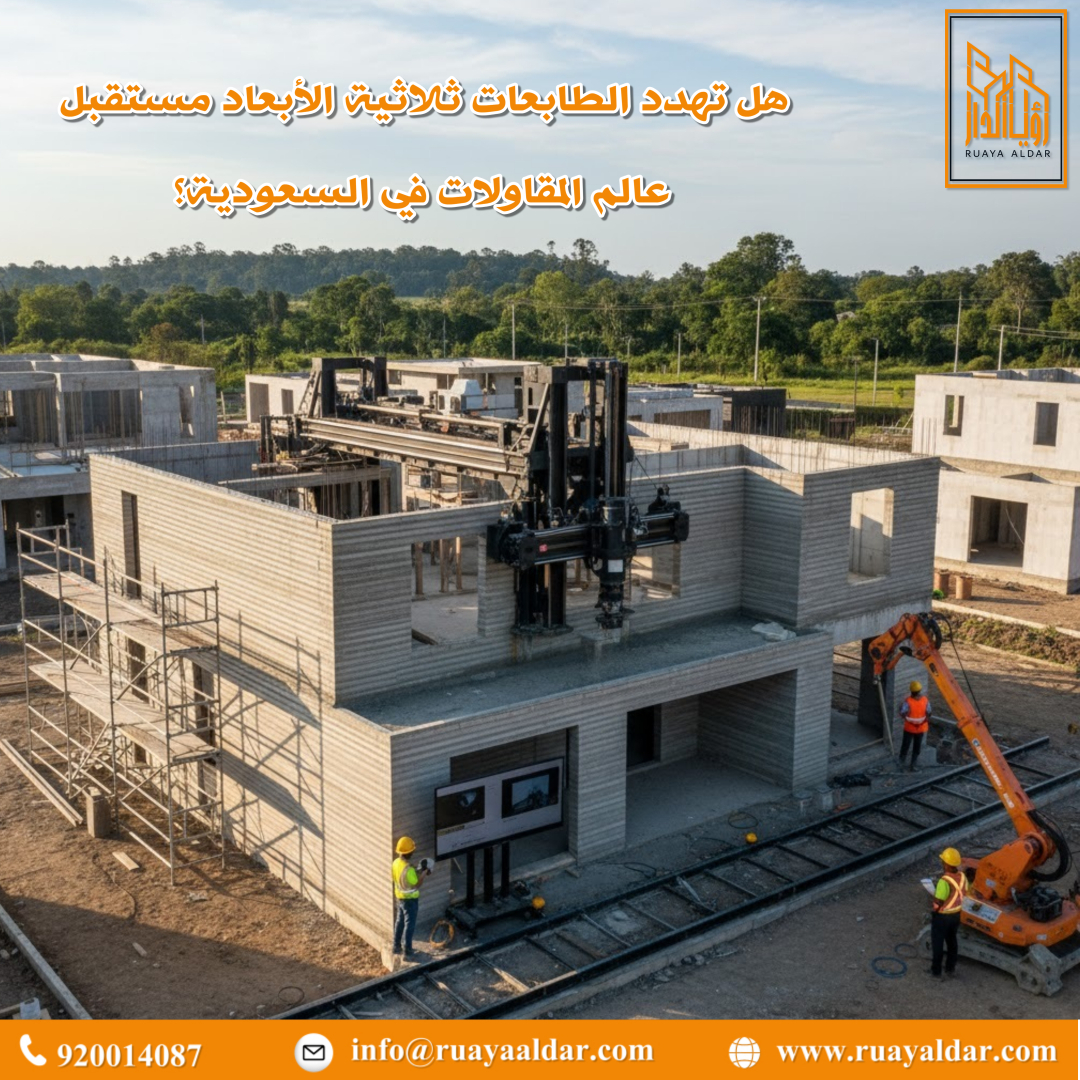
In 2022, Dar Al Arkan, one of the Kingdom’s leading real estate developers, achieved a historic milestone by completing the first 3D-printed villa in Saudi Arabia. The villa, consisting of three floors with a total area of 345 square meters and a height of 9.9 meters, was completed in just 26 days. Most impressively, the project met all Saudi building codes and safety standards, setting a new benchmark for the future of construction in the region.
This achievement demonstrated that 3D printing can deliver faster, more efficient, and more sustainable construction while maintaining high quality and precision.
How 3D Printing Works in Construction
Unlike traditional construction methods that rely on bricks, steel, and manual labor, 3D printing uses a robotic arm or large printer that extrudes layers of specialized concrete or composite material to build the structure. The printer follows a digital model (CAD design), ensuring accuracy and reducing the risk of human error.
Some of the key advantages include:
- Speed: Printing a building can take days instead of months.
- Cost Reduction: Less labor and material waste lower total project costs.
- Sustainability: 3D printing uses eco-friendly materials and minimizes construction waste.
- Design Freedom: Complex architectural shapes and customizations are easier to produce.
- Safety: Fewer workers on-site mean fewer accidents and risks.
Impact on Saudi Arabia’s Construction Sector
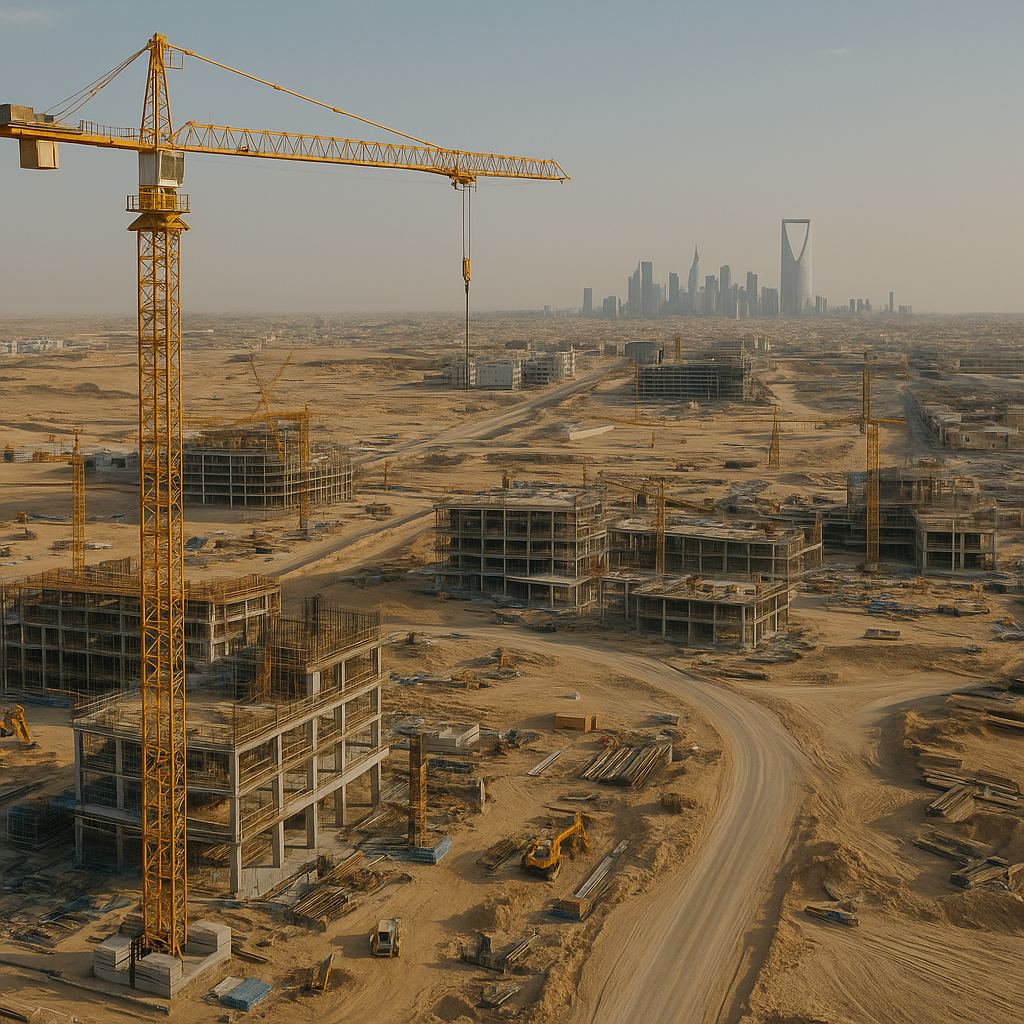
For Saudi contractors, the potential impact is profound. The technology can help overcome labor shortages, reduce dependency on imported materials, and accelerate housing and infrastructure projects. This is particularly important given the Kingdom’s ambitious urban expansion plans under Vision 2030—such as NEOM, Qiddiya, and The Line.
As more companies adopt digital construction methods, the industry may see a shift from traditional manual labor to technology-driven operations, requiring new skills such as 3D design, robotics, and digital project management.
What About Home 3D Printers?
While large-scale 3D printers for commercial construction are already in use, home 3D printers are also evolving rapidly. In the near future, it may be possible for individuals to “print” small structures, decorative elements, or even functional parts for home renovation.
This democratization of construction technology could change how people think about housing—allowing custom designs at lower costs, reducing reliance on contractors for smaller projects, and promoting innovation in local architecture.
Challenges and Limitations
However, this transformation is not without challenges:
- Regulations: Saudi building codes need continuous updates to accommodate 3D-printed structures.
- Materials: Specialized printing materials are still expensive and not widely available.
- Training: Engineers and workers need new skills to operate and maintain 3D printing systems.
- Initial Costs: The equipment and setup require significant investment.
Despite these obstacles, the long-term benefits far outweigh the costs—particularly as the technology matures and becomes more accessible.
Ru’ya Al-Dar Contracting and the Future of Construction in Tabuk
At Ru’ya Al-Dar Trading & Contracting Company, based in Tabuk, we closely follow technological advancements that can enhance construction efficiency, sustainability, and quality. Our mission is to combine innovation with reliability, ensuring our clients benefit from modern solutions that save time and resources.
3D printing represents not just a tool, but a new philosophy of construction—one that aligns with our vision for smarter, greener, and more affordable building methods across Saudi Arabia.
As pioneers in the region’s contracting field, we believe that adopting such technologies will enable us to deliver faster projects, higher precision, and better client satisfaction. The day may not be far when homes in Tabuk and across the Kingdom are built—or even customized—through 3D printing technology.
Conclusion
3D printing is redefining what’s possible in construction. From faster completion times to sustainable designs, it represents the future of building in Saudi Arabia. As the Kingdom continues its march toward Vision 2030, innovations like 3D printing will play a critical role in shaping smarter cities, efficient housing, and sustainable development.
At Ru’ya Al-Dar, we are excited to be part of this transformation—embracing innovation today to build a better tomorrow.